


What Insurance Adjusters Are Really Looking For After Your Phoenix Car Accident
Before I became a personal injury attorney, I worked inside the insurance industry. I saw exactly what happens the moment a car accident claim lands on an adjuster’s desk in Phoenix: the playbook, the scripts, the software used to value your case, and the small comments from claimants that get circled in red and used against them weeks later.
I left that side of the business to do something different: protect injured people from those same tactics. If you were just in a crash on I-10, the 202, or anywhere in Maricopa County, and an adjuster has already called you, this guide is what I wish every Phoenix accident victim knew before picking up the phone. If you’d rather skip straight to talking with a Phoenix car accident lawyer instead of decoding this on your own, we’re available 24/7.
Here is what insurance companies are actually looking for after a Phoenix car accident, and how to keep them from using it against you.
The First 72 Hours: What Adjusters Are Doing While You’re Still in Pain
Adjusters are trained to contact you fast, usually within 24 to 48 hours of the crash. The reason is simple: the sooner they reach you, the more likely you are to talk before you have a full picture of your injuries, before you have a lawyer, and before you’ve thought carefully about what to say. During that first call, an adjuster is generally working through a mental checklist:
- Can I get a recorded statement?
- Will this person admit any fault, even partial?
- Are they hurt as badly as they’re claiming?
- Will they accept a fast, low offer to make this go away?
- What can I lock in now that I can use against them later?
The friendly tone is part of the strategy. I know, because I was trained in it. It works because injured people want to be cooperative, and most of us assume that being polite and forthcoming will be rewarded. In a personal injury claim, it usually isn’t.
What Insurance Companies Look For in You
Most of what an adjuster examines isn’t the crash itself. It’s the claimant.
Your Story, Your Medical History, and What They’ll Use Against You
The first thing an adjuster does is pull the Phoenix Police Department crash report, or the Arizona DPS report if it happened on the freeway, and compare it line by line to what you tell them. Even minor differences, like a slightly different speed estimate, a different lane position, or a different sequence of events, get flagged as proof that you’re “unreliable.” The truth is that crash memory is messy. Adrenaline, head impact, and shock all affect recall, but the insurance company treats every inconsistency as a credibility problem.
Your medical history gets the same scrutiny. If you delay treatment for more than a few days, or stop going to the doctor for a few weeks during your recovery, that gap becomes a weapon. The adjuster’s note will read something like: “Claimant treated 9/10, then no treatment until 9/27, injuries likely not significant or unrelated.” In our experience handling Phoenix car accident cases, many clients miss appointments because of work, childcare, or waiting on insurance approval. The adjuster doesn’t care why. They only care that the record shows a gap.
They’ll also dig into your past. If you’ve ever had a chiropractic adjustment, a sore back, an old sports injury, or anything in your medical history that touches the same body part you injured in the crash, the insurance company will find it. They subpoena years of medical records looking for anything they can blame your current pain on. A pre-existing condition does not automatically defeat your claim. Under Arizona law, you’re generally entitled to recover for the aggravation of a prior condition, but the adjuster will try to convince you otherwise.
Your Social Media and the Recorded Statement
Assume the adjuster is looking at your Facebook, Instagram, and TikTok. In serious injury claims, they sometimes hire surveillance investigators to follow claimants in person and film them at the grocery store, the gym, or walking the dog. A single photo of you smiling at a birthday party can be presented as evidence that you aren’t really hurt, even if you were in pain the whole time and went home early. We’ve seen claims devalued by tens of thousands of dollars over a single photo taken out of context.
The other major tool adjusters use against claimants is the recorded statement. They ask open-ended questions designed to get you to:
- Speculate about speeds, distances, or fault you can’t actually be sure of
- Minimize your injuries (“I feel okay today,” said while on painkillers)
- Admit you weren’t wearing a seatbelt, were on your phone, or were tired
- Lock yourself into a version of events before you’ve seen the police report
In Arizona, you are generally not required to give a recorded statement to the other driver’s insurance company. Talk to a lawyer before agreeing to one.
What They Look For in the Crash Itself
After they evaluate you, adjusters dig into the crash facts. They read police reports closely, looking for officer language like “possibly,” “appears to have,” “claimant stated,” or “unable to determine.” Any softness in the officer’s findings becomes leverage, and they’ll also look at who was cited. If the other driver wasn’t cited, they’ll argue fault is unclear, even if the other driver was obviously responsible.
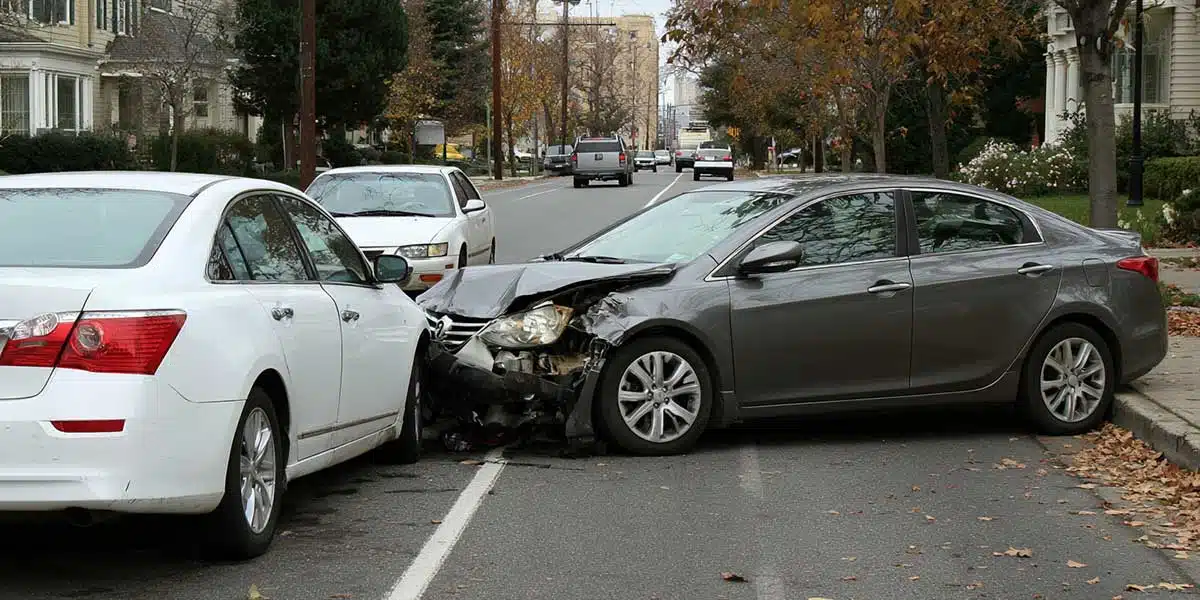
Property damage photos matter too. If your bumper looks fine, expect to hear the words “low-impact collision” repeated for months. Insurance companies argue that minor visible damage means minor injuries, a claim that’s been repeatedly contradicted by biomechanics research, but one they push anyway because juries sometimes accept it. This is especially common in rear-end crashes on Phoenix streets like Camelback Road, Indian School, or Bell Road, where stop and go traffic produces low-speed impacts that still cause real neck and back injuries.
Witnesses come under the same microscope. Adjusters look for witnesses who contradict you, or for the absence of witnesses entirely, and they note whether witnesses know you. A statement from your passenger is treated as less credible than a statement from a stranger.
Phoenix Weather and Road Conditions
Phoenix-specific factors come into play here too. If your crash happened during a monsoon downpour in July or August, a dust storm or haboob on I-10 between Phoenix and Tucson, low-angle sun glare on east-west streets at sunrise or sunset, or snowbird season with out-of-state drivers on Loop 101 and the 202, the adjuster will argue you should have anticipated the hazard and driven more carefully, even when the other driver caused the crash.
Understanding Arizona’s Comparative Negligence Rule
This is the most important thing for any Phoenix accident victim to understand, and most adjusters count on you not knowing it. Arizona follows pure comparative negligence (A.R.S. § 12-2505). That means even if you are 99% at fault for a crash, you can still recover 1% of your damages. But it also means every percentage point of fault the insurance company can pin on you reduces your settlement by that same percentage.
On a $100,000 claim, here’s how the math plays out:
- If they convince a jury you were 0% at fault, you recover $100,000
- If they convince a jury you were 20% at fault, you recover $80,000
- If they convince a jury you were 50% at fault, you recover $50,000
Adjusters know this math, which is why they spend so much time looking for reasons to assign you any fault at all. “Were you looking at your phone?” “Could you have braked sooner?” “Were you familiar with that intersection?” Every question is an attempt to chip away at your recovery. When we take over a case, one of the first things we do is challenge the fault narrative the adjuster has been building.
How They Decide What Your Claim Is Worth
Most large insurance companies in Arizona don’t value claims based on a sympathetic human assessment. They use software, tools like Colossus and ClaimIQ, that take dozens of inputs (injury codes, treatment types, duration of care, age, occupation, even ZIP code) and spit out a recommended settlement range.
The software rewards specific injury diagnoses backed by objective imaging like MRI or CT scans, consistent and documented treatment, specialist care from an orthopedist, neurologist, or pain management doctor, documented lost wages with employer verification, and clear evidence of fault on the other driver.
It penalizes the opposite: vague soft-tissue diagnoses without imaging, treatment gaps, chiropractic care only with no medical doctor involvement, a lack of documentation, and any documented contributory fault.
This is why how you handle the first 60 days of your claim has a huge impact on what your case is worth months later. By the time most people call a lawyer, the software has already locked in a number based on the picture the adjuster painted.
Common Tactics Adjusters Use to Lowball Phoenix Claims
There are a handful of moves we see adjusters run on Phoenix accident victims over and over.
The fast, friendly offer. Within a week or two, before you’ve finished treatment, you’ll get a call: “We’d like to resolve this quickly, we can send you a check for $3,500 today.” Once you accept and sign the release, your claim is closed forever, even if you need surgery six months later.
The “we need a recorded statement” line. You usually don’t need to give one. Adjusters often imply that a recorded statement is required before they’ll pay your medical bills or property damage. For your own insurance company, it may be required by your policy. For the other driver’s insurance company, it almost never is.
The medical bill audit. They’ll send your medical bills to a third-party “review” company that flags charges as “not reasonable and customary.” This is used to argue that your medical specials are inflated, which they typically aren’t.
The disappearing offer. “This is our best and final offer, and it’s only good until Friday.” Real settlement negotiations don’t work that way. The offer rarely actually disappears.
The policy limits dance. If the at-fault driver has minimum policy limits ($25,000 in Arizona under A.R.S. § 28-4009), the adjuster may refuse to disclose the limits or stall until the statute of limitations is close to expiring. This is why Arizona’s two-year filing deadline under A.R.S. § 12-542 matters so much. Miss it and your claim is gone.
How to Protect Yourself After a Phoenix Crash
You don’t need to know every tactic to protect yourself. You just need to do a few things consistently:
- Get medical care immediately and keep going. Don’t tough it out and don’t skip appointments. If you go to the ER, follow up with a primary care doctor within a few days.
- Watch what you say and post. Don’t give the other driver’s insurance company a recorded statement until you talk to a lawyer, and don’t post about the crash or your recovery on social media. Tighten your privacy settings, but assume anything online can be found.
- Document everything. Take photos of the scene, your injuries, your vehicle, the other vehicle, road conditions, and skid marks. Get the police report number before you leave the scene. In Phoenix, you can request the report from the Phoenix Police Department, or, for freeway crashes, from Arizona DPS.
- Keep your paper trail. Save every bill, prescription receipt, and pay stub showing missed work.
- Talk to a lawyer before you accept any offer. Most personal injury attorneys, including our firm, offer free consultations.
How Runion Personal Injury Lawyers Fights Back
I founded this firm because I saw what was happening to injured people on the other side of those phone calls. Once the insurance company knows we represent you, the tone of every conversation changes. We take over all communication with the adjuster so you don’t have to, and we build your file the way the insurance software wants to see it, coordinating your medical care and making sure the right specialists are documenting the right findings.
We also investigate the crash independently through scene photos, witness re-interviews, traffic camera footage, and, when needed, accident reconstruction experts. We push back on every fault argument the adjuster tries to use under Arizona’s pure comparative negligence rule, and we are ready to file in Maricopa County Superior Court if the insurance company refuses to be reasonable. Many adjusters only get serious once a lawsuit is filed.
Our team has recovered over $50 million for clients across Arizona and New Mexico, including a $4.6 million wrongful death settlement and a $2.74 million product defect result. Past results don’t guarantee a similar outcome; every case is different. But they show what we’re capable of when we’re given the chance to fight. And we back our work with a Net Recovery Guarantee: you will never take home less than we do in attorney’s fees. If we can’t win, you owe us nothing. You can read more about founding attorney Derick Runion’s background working inside the insurance industry before he switched sides.
Frequently Asked Questions
Do I Have to Give the Other Driver’s Insurance Company a Recorded Statement After a Phoenix Car Accident?
In most cases, no. You are generally not legally required to give a recorded statement to the at-fault driver’s insurance company. Your own insurance policy may require cooperation with your own carrier, but even then, you can ask to do it with a lawyer present. Talk to an attorney before agreeing to any recorded statement.
How Long Do I Have to File a Personal Injury Claim in Arizona?
Arizona’s statute of limitations for most personal injury claims is two years from the date of the accident under A.R.S. § 12-542. Claims against government entities (like the City of Phoenix or ADOT) have much shorter notice deadlines, as little as 180 days under A.R.S. § 12-821.01. Don’t wait.
What if the Insurance Company Says I Was Partially at Fault?
Arizona’s pure comparative negligence rule means you can still recover even if you were partially at fault. Your recovery is just reduced by your percentage of fault. Adjusters frequently exaggerate the claimant’s share of fault to lower payouts. A personal injury lawyer can review the evidence and push back on inflated fault arguments.
Will the Insurance Company Really Watch My Social Media?
Yes. Adjusters routinely review claimants’ public social media accounts. In higher-value claims, insurance companies may hire surveillance investigators to physically observe claimants. Set your accounts to private, but don’t post about the crash, your injuries, or your activity level until your case is resolved.
How Much Is My Phoenix Car Accident Claim Worth?
There is no honest “average settlement” number, and any lawyer who gives you one without reviewing your case should be a red flag. The value of a claim depends on the severity of your injuries, the strength of the liability evidence, the at-fault driver’s available insurance coverage, your medical expenses, your lost income, and the long-term impact on your life. We provide a free consultation so we can give you a realistic assessment based on your specific situation.
Talk to a Phoenix Car Accident Lawyer Who Knows the Other Side
If an insurance company is already asking you for a recorded statement, offering you a fast settlement, or telling you they’re “still investigating” weeks after the crash, that’s the time to call us, not after the check has been cashed.
Contact Runion Personal Injury Lawyers for a free consultation. No fee unless we win, backed by our Net Recovery Guarantee.
Runion Personal Injury Lawyers,
3200 N Central Ave, Suite 1100, Phoenix, AZ 85012.
Phone: (602) 825-3502, available 24/7

Derick Runion is the founding partner of Runion Personal Injury Lawyers, licensed to practice in Arizona and the U.S. District Court, District of Arizona. He founded the firm in 2011 after working in the life insurance industry, where he saw insurers use tactics like post-claims underwriting to deny families the benefits they’d paid for, an experience that pushed him to represent injury victims instead. Since then, he’s helped recover more than $50 million for clients, maintaining a 99 percent case success rate. A Super Lawyers Rising Star (2021) and Arizona State University graduate, Derick is bilingual in English and Spanish.