
Guide To Driving in Bad Weather
The unpredictable nature of weather means drivers should always be on guard against sudden changes in road conditions. On average, over 6,035,000 vehicle crashes happen each year. About 12 percent of these, nearly 745,000, are caused by weather conditions.
This guide goes beyond simple tips for driving in bad weather. It explains the reasons behind each recommendation and gives you practical steps to make safer decisions in rain, snow, fog, and other hazardous conditions.

Written By: Derick Runion
Last Updated: October 10, 2025
Table of Contents
- The Dangers of Driving in Bad Weather
- Driving in Bad Weather: Universal Principles To Keep You Safe
- How To Drive Under Specific Weather Conditions
- How To Prepare Your Car for Bad Weather
- What To Do in an Emergency While Driving in Hazardous Conditions
- Defensive Driving Strategies for Severe Weather
- Staying Safe on the Road Regardless of the Weather
The Dangers of Driving in Bad Weather
Hazardous weather can take numerous forms. However, according to NHTSA, more than 77 percent of weather-related crashes occur during rain or mist conditions. This is typically due to the risks associated with reduced visibility and slick roads.
Additionally, 18 percent of these collisions happen due to freezing precipitation like snow, sleet, hail, or freezing rain or drizzle. Below we’ve outlined some statistics on injuries and deaths due to dangerous weather conditions:
- Each year, over 1,300 people are killed and more than 116,800 people are injured in vehicle crashes on snowy, slushy, or icy pavements.
- There are over 870 people killed and 70,900 injured in snow and sleet-related accidents each year.
- 680 people are killed annually in incidents involving icy pavement.
Driving in Bad Weather: Universal Principles To Keep You Safe
Certain core safety principles apply whenever you’re driving in rain, snow, fog, or other hazardous conditions.
Slow Down
While speed limits are for ideal conditions, drivers may need to slow down and operate their vehicles below the legal limit in hazardous conditions. The rule of thumb for rain is to drive at one-third the speed limit, and half the speed limit for snow-packed roads.
Increase Following Distance
In normal driving conditions, motorists should follow the four-second rule, leaving at least four seconds of space between their vehicle and the one ahead. In hazardous weather, this distance should be doubled to 8 to 10 seconds to allow for extra stopping time and reduced traction.
Look Ahead
Safe driving means defensive driving. It’s essential to always be on the lookout for changing road conditions in front of you. Scan the road far ahead to anticipate issues, such as slick surfaces, deep slush, or an accident.
Avoid Sudden Movements
When roads are slick from slush or rain, avoid making sudden movements with your vehicle. Braking, accelerating, and steering should all be gradual and steady to help maintain traction. Quick, jerky reactions may feel natural, especially for nervous drivers, but they increase the risk of hydroplaning or sliding.
How To Drive Under Specific Weather Conditions
Being calm and alert under any circumstances while driving is key to a safe journey. That said, you can take proactive steps in specific scenarios to further protect yourself and those around you.
Driving in Heavy Rain and Storms
When the weather turns to heavy rainfall and storms, it’s typically recommended to stay off roadways until the sky clears up. These conditions put drivers at risk of hydroplaning and becoming trapped in flood zones.
There are essential precautions you can take to reduce the risk of a crash. First and foremost, make sure your windshield wipers are up-to-date and in good working condition. These tools are your first line of defense in having a clear view of the road.
If you find yourself in a storm while driving, adjust your speed by following the one-third rule for rain and the one-half rule for snow. Avoid flooded roads, which may or may not have warning signs indicating the risk. If you’re unable to maneuver safely, pull over to a non-flooded area and wait until the weather clears up.
Snow, Ice, and Freezing Rain
One of the biggest concerns when it comes to driving in snow, ice, or freezing rain is the risk of black ice. Unfortunately, black ice is challenging to spot, and you may end up driving over it before you realize it’s there.
To prepare for this type of situation, ensure your tires are equipped with proper chains and stay up-to-date on maintenance. For those who live in areas with heavy snowfall, switch to snow tires during the colder months of the year.
544 million vehicle-hours of delay per year are due to snow, ice, and fog. Keeping an emergency kit in your vehicle, consisting of blankets, water, and flashlights, is essential in case you end up stuck in traffic or stranded during a Winter storm.
If you do find yourself losing control of your vehicle on black ice, it’s vital to utilize gentle braking and acceleration. Sudden movements can cause your car to spin or even flip under more severe circumstances.
Safe Driving in Fog and Low Visibility
People may view foggy weather conditions as less of a threat compared to more intense storms; however, these scenarios still heighten the risk of an accident significantly. It’s crucial to understand the difference between fog lights and high beams, as well as when to use each.
Fog lights are meant to illuminate the road immediately in front of your vehicle when fog, rain, or snow is causing visibility problems. High beams, on the other hand, provide long-range visibility for dark, open roads. These are preferable when there’s no oncoming traffic, as the intensity of these lights can be blinding.
If you find yourself driving in fog and low visibility, it’s vital to maintain lane discipline and to listen for traffic rather than relying solely on sight. If the weather gets to a point where visibility is zero, you should pull over safely and remain in park until the conditions improve.
Driving in Windy Conditions
Strong winds can significantly impact vehicle control, especially for SUVs, trucks, trailers, and motorcycles. When you encounter extreme wind on the road, keep both hands on the wheel to avoid sudden movements and adjust your speed accordingly. It’s also recommended to stay away from large semi-trucks, as these vehicles are more at risk of tipping if their cargo shifts and unbalances the load.
How To Prepare Your Car for Bad Weather
You can take proactive steps to prepare for bad weather conditions before they even hit, including the following:
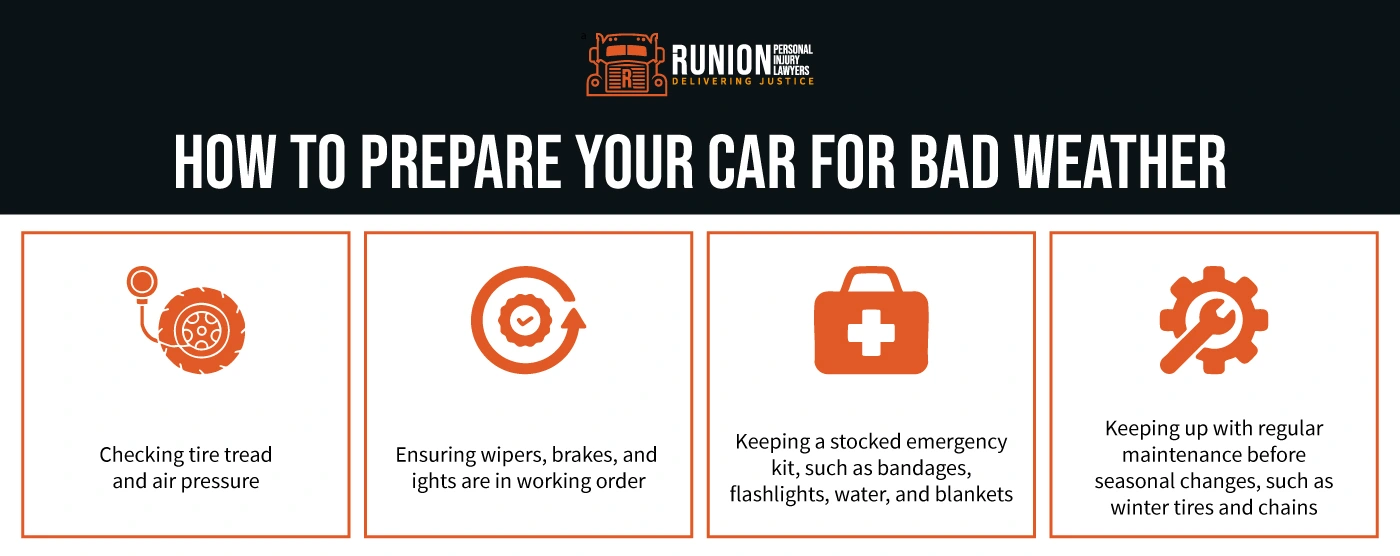
- Checking tire tread and air pressure
- Ensuring wipers, brakes, and lights are in working order
- Keeping a stocked emergency kit, such as bandages, flashlights, water, and blankets
- Keeping up with regular maintenance before seasonal changes, such as winter tires and chains

What To Do in an Emergency While Driving in Hazardous Conditions
No one plans to be in an emergency while on the road, but it can happen to anyone, and knowing what to do can be the difference between a safe and catastrophic outcome.
What To Do if You Start To Skid
If your vehicle skids or slides on black ice, water, or slush, it’s important to stay calm and continue steering straight ahead. Sudden turns in steering can cause you to entirely lose control of your vehicle. Don’t slam on the brakes, but instead maintain a gradual reduction of speed until your vehicle comes to a complete stop.
What To Do if You Get Stuck or Stranded
Whether it’s a monsoon, a hurricane, or a blizzard, getting stranded can be a scary experience. Once you’ve gotten to a safe location, such as a freeway shoulder or a parking lot, stay in your car and instruct any passengers to stay put as well. If possible, conserve your fuel by turning off the vehicle.
You should also turn on your hazard lights to make your presence known to those around you. If you’re stranded in extreme temperatures or someone has sustained an injury, call 911 for help.
In the aftermath of being stranded, you should clear your vehicle’s exhaust pipe of snow or mud to prevent carbon monoxide poisoning. This is typically doable without a professional’s intervention, but you can always consult a mechanic if needed.
Defensive Driving Strategies for Severe Weather
Even on sunny, clear days, motorists should drive defensively and be prepared for sudden changes to road conditions. Poor weather conditions only exacerbate this need further. Some defensive driving strategies you can take in dangerous weather include the following:
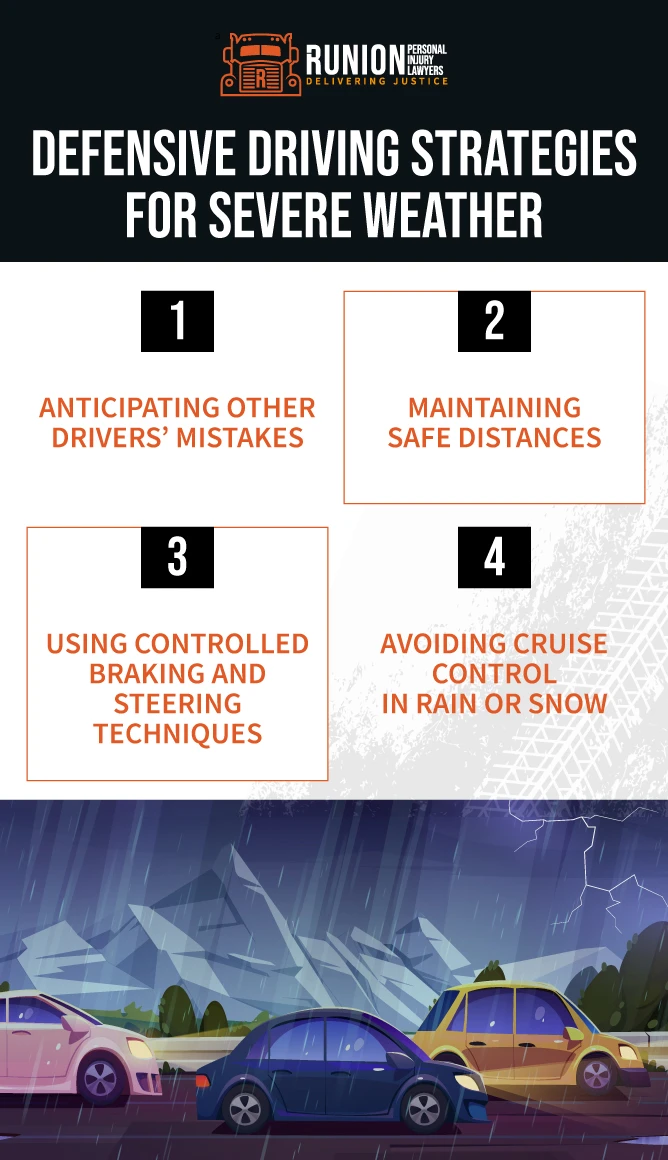
- Anticipating other drivers’ mistakes – Stay alert and aware of your surroundings. Be prepared for motorists who make unsafe lane changes and run red lights. One way you can do this is to pause before proceeding when a traffic light turns green. This helps you avoid a collision with a motorist who underestimates how much time they have to cross an intersection.
- Maintaining safe distances – Keeping adequate space between you and the vehicle in front of you can help prevent a rear-end collision, especially when black ice and hydroplaning become a potential risk factor. This also helps you anticipate a sudden stop or brake-checking by the vehicle in front of you.
- Using controlled braking and steering techniques – When weather becomes hazardous and you’re faced with heavy rainfall, strong winds, and reduced visibility, it’s vital to utilize controlled braking and steering. This means avoiding sudden movements and practicing gradual turning and braking.
- Avoiding cruise control in rain or snow – Cruise control can be a convenient tool when travelling on long stretches of road with a consistent speed limit. However, it should never be used when navigating rain or snow. You must be fully in control of your vehicle when weather threatens sudden changes in road conditions.
Staying Safe on the Road Regardless of the Weather
The best way to prevent an accident as a driver is to equip yourself with the tools and knowledge needed to navigate sudden changes in road conditions. Derick Runion and our team are committed to teaching drivers nationwide about safe driving habits and collision prevention.
If you or your loved one has been injured in a crash, don’t hesitate to contact our attorneys for support with your case. Remember, the safest drivers aren’t the fastest, but the most prepared. Schedule your free consultation today.