
Arizona Rear-End Accident Lawyer
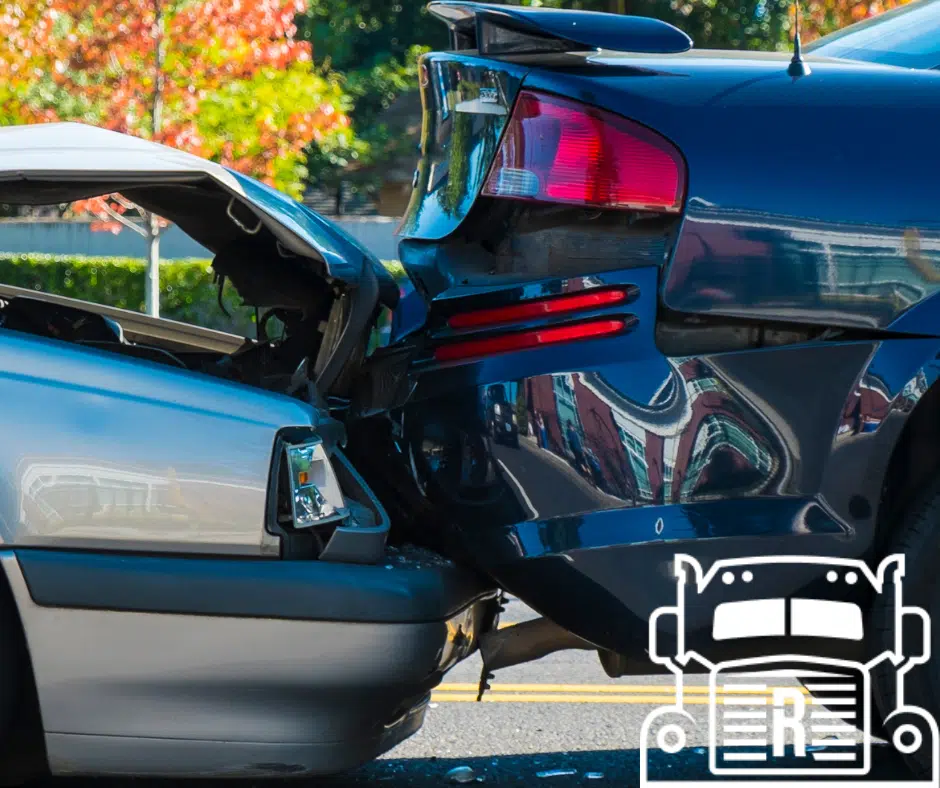
Rear-end collisions are the most common crash in Arizona. The Arizona Department of Transportation counted 38,654 rear-end crashes in 2024, which was 37.5 percent of all multi-vehicle crashes in the state and more than any other manner of collision. Ninety-one of them were fatal.
Most people assume these cases are simple, because everyone has heard that the driver in back is automatically at fault. That is not Arizona law. Believing it is how people accept an early offer on a case that was worth far more, and how injured drivers give recorded statements that hand the insurer a comparative fault argument.
$50+ Million Recovered

Content Reviewed By: Derick Runion
Table of Contents
- Arizona Has No Rule That the Rear Driver Is Automatically at Fault
- What Actually Has To Be Proven, and the Statutes That Help
- Types of Compensation Available After a Rear-End Accident
- Potentially At-Fault Parties in a Rear-End Collision in Arizona
- What Causes Rear-End Accidents in Arizona?
- Common Injuries Experienced in Rear-End Collisions
- Arizona Rear-End Accident FAQs
- Consult an Arizona Rear-End Accident Lawyer Today
Arizona Has No Rule That the Rear Driver Is Automatically at Fault
Arizona has no presumption of negligence against a rear driver. It does not exist in statute, and the Revised Arizona Jury Instructions contain no rear-end instruction at all. The word does not appear in the negligence instructions.
What Arizona does have is res ipsa loquitur, and the Arizona Supreme Court addressed it in a rear-end case, O’Donnell v. Maves, 103 Ariz. 28, 436 P.2d 577 (1968). The court agreed the doctrine “is applicable to the usual rear-end collision,” and then drew the distinction that matters: res ipsa “gives rise to an inference, not a presumption.” The facts “warrant the inference of negligence, not that they compel such an inference.”
An inference is something a jury may draw. A presumption is something the law requires. Arizona gives you the first and not the second, and the Court of Appeals has said the jury “is not required to do so even in the absence of rebutting evidence.” Holland v. Kitterman, 14 Ariz. App. 179 (App. 1971).
There is a further catch in O’Donnell that most pages miss. Res ipsa requires that the injured person not be able to show what actually caused the crash. In most rear-end cases you can show it, which takes the doctrine off the table entirely. Res ipsa is a fallback, not a strategy.
None of this means these cases are hard to win. It means they have to be proven rather than assumed, and the proof is what we do.
What Actually Has To Be Proven, and the Statutes That Help
Two Arizona traffic statutes carry most of the weight in a rear-end case.
A.R.S. § 28-701(A) is the stronger of the two and is rarely cited by other firms. It requires that a driver “control the speed of a vehicle as necessary to avoid colliding with any object, person, vehicle or other conveyance on, entering or adjacent to the highway.” That sentence describes a rear-end collision exactly.
The clearest way to think about that duty is the way skiing works. The skier above has the whole slope in front of them and can see everyone below. The skier below cannot see behind and cannot anticipate what is coming down. So the duty to avoid the collision sits with the person approaching from behind, because that is the only person in a position to prevent it.
Section 28-701(A) puts the same duty on the driver approaching from behind. Important distinction, and it is the one the myth gets wrong: having the duty is not the same as having breached it. Arizona places the duty of avoidance on the rear driver and still requires that the breach be proven rather than presumed. Duty and breach are separate questions, and collapsing them is exactly how “the rear driver is automatically at fault” got started.
A.R.S. § 28-730(A) prohibits following “more closely than is reasonable and prudent,” with due regard for speed, traffic and road conditions. Note what it does not do: Arizona sets no numeric following distance anywhere. No car lengths, no seconds, no feet.
A word of caution we will give you straight, because other pages get it wrong. A citation for following too closely is powerful evidence, and a jury can be instructed on the statute. But Arizona reserves negligence per se for statutes that proscribe specific acts, not those that state a general standard of care. Hutto v. Francisco, 210 Ariz. 88, 107 P.3d 934 (App. 2005); Ibarra v. Gastelum, 249 Ariz. 493, 471 P.3d 1028 (App. 2020). Section 28-730(A)’s “reasonable and prudent” language reads like a general standard. So a ticket is strong proof of negligence. It is not automatic liability, and causation is always a separate question.
The Defenses Rear Drivers Actually Raise
The most common is that your client stopped suddenly and created an emergency. Arizona does have a sudden emergency instruction, but the Arizona Supreme Court cut it down badly in Myhaver v. Knutson, 189 Ariz. 286, 942 P.2d 445 (1997).
The court found the instruction can “single out and unduly emphasize one factor and thus mislead a jury,” told trial judges to give it “only in the rare case,” and said it “will rarely, if ever, be error to refuse to give it.” Most usefully, the court confined it to an emergency that “is not of the routine sort produced by the impending accident but arises from events the driver could not be expected to anticipate.”
A car in front of you braking is the routine sort produced by the impending accident. That is the whole argument, and it comes from the Arizona Supreme Court.
The instruction also requires that the driver claiming it was acting “without negligence on his or her part.” A driver who was following too closely or speeding does not get it at all.
Brake Light Failure and Mechanical Failure
The second defense is that your brake lights were out. A.R.S. § 28-939 requires a stop lamp to be “plainly visible and understandable from a distance of one hundred feet to the rear both during normal sunlight and at nighttime,” and requires that each such lamp “be maintained at all times in good working condition.” Unlike the following-too-closely statute, that is a specific requirement rather than a general standard, which makes it a much better negligence per se candidate if the failure is on the other vehicle.
The third is that the brakes failed. A.R.S. § 28-952 requires two separate means of applying brakes, built so that failure of one part does not leave the vehicle without braking on at least two wheels. Brake failure is also not the shield drivers think it is. O’Donnell v. Maves was itself a brake line failure case, and the failure did not end the inquiry; it moved the question to why the vehicle was in that condition.
One more thing worth knowing: Arizona rejects the “unavoidable accident” instruction. O’Donnell v. Maves.
I was rear ended by a drunk driver and it was a hit and run. I contacted Runion Law firm and they immediately jumped on the case! They arranged for medical treatment for my injuries, worked with both insurance companies, and secured me a large settlement! Their staff was always in contact and kept me up to date on progress. I would highly recommend them to anyone involved in a personal injury case.
Chris B.
Curiel & Runion were able to help us with our any hesitation. From being victims of a drunk driver rear ending us to getting us etiquette care from PT. We didn’t know what to but our attorney’s walked us through the whole process. Couldn’t thank them enough!
Katy C.
Five star guys and chef’s kiss!!! After my rear end car accident, I had no idea where to start. Dealing with medical bills, insurance, and all the stress was overwhelming. I’m so glad I found Runion Personal Injury Lawyers. They took care of everything, kept me updated, and made sure I got the settlement I deserved. The whole team was supportive and really fought for me. If you need a personal injury lawyer in Phoenix Arizona, I can’t recommend them enough! ???
Track Team
Successful Personal Injury Case Results
$175,000
- Car Accident
Our client in Marana (Juniper Rd & Ina Rd) was rear-ended and sustained neck and back injuries. The insurer argued that the low property damage meant the injuries couldn’t have been caused by the crash. Our firm gathered strong medical documentation and expert opinions, ultimately securing a policy-limits recovery of $175,000.
$358,000
- Car Accident
Secured $358,000 for a client involved in a multi-vehicle chain reaction on the I-17 Freeway (Milepost 220, Phoenix), which caused serious spinal injuries. With insurers disputing which driver initiated the crash, our firm enlisted an investigator to gather witness statements and successfully established liability against the vehicle with the largest policy limits. After ensuring the client completed the necessary medical treatment, we secured the $358,000 result.
$1,000,000
- Car Accident
Our client was seriously injured in a rear-end collision on State Route 101 in Phoenix, caused by a commercial driver who failed to control his speed and was cited under A.R.S. § 28-701A. By assembling a team of experts—including a crash reconstructionist, biomechanical engineer, life care planner, and economist—we built a strong case that secured compensation for our client’s medical needs and long-term losses.
Chain-Reaction Crashes and Why Percentages Decide the Money
Multi-vehicle pileups are where rear-end cases get genuinely complicated, and where Arizona law can cost you money if nobody is paying attention.
Arizona abolished joint and several liability. Under A.R.S. § 12-2506(A), each defendant’s liability “is several only and is not joint,” and each one is “liable only for the amount of damages allocated to that defendant in direct proportion to that defendant’s percentage of fault.”
In practice that means this. If a jury finds three drivers responsible and assigns 50 percent to a driver with no insurance, that 50 percent is not collectible from the other two. You absorb it. There are only three narrow exceptions in the statute, and negligence alone does not reach any of them.
Two consequences follow. First, apportionment is the case. Getting a percentage moved from your client to a defendant, or from an uninsured defendant to an insured one, is worth more than almost anything else that happens. Second, uninsured and underinsured motorist coverage is often what makes a chain-reaction case worth pursuing at all.
A defendant can also point the finger at someone who was never sued, by filing a notice of nonparty at fault. Under A.R.S. § 12-2506(B) and the Arizona Rules of Civil Procedure, that notice carries a deadline measured from the defendant’s answer, and a jury cannot allocate fault to a nonparty who was never properly disclosed.
Types of Compensation Available After a Rear-End Accident
Arizona does not cap compensatory damages in an ordinary injury case. What you can recover depends on the proof, not on a schedule.
- Medical expenses, past and future, including the imaging, injections and surgery that often follow a cervical or lumbar injury months later.
- Lost earnings and lost earning capacity, which are different claims. The second one matters most for people whose work is physical.
- Pain, suffering and loss of enjoyment of life.
- Property damage and the diminished value of a repaired vehicle.
- Punitive damages, in the narrow cases that justify them, such as an impaired or fleeing driver.
Whatever the total, it is then reduced by any percentage of fault assigned to you. That reduction is why the fault fight is the money fight.
Potentially At-Fault Parties in a Rear-End Collision in Arizona
The driver behind you is the obvious defendant and often not the only one.
- The driver who struck you, for speed, following distance, or inattention.
- That driver’s employer, if the vehicle was being used for work. This is routine in delivery, rideshare and commercial truck collisions, and it usually means a far larger policy.
- A third driver who triggered the chain, including one who braked hard, merged unsafely, or left the scene.
- A vehicle or parts manufacturer, where brakes or lighting failed.
- A maintenance or repair shop that serviced the brakes or lighting.
- A government entity, where a signal, sign or road condition contributed. These claims carry much shorter deadlines, described below.
What Causes Rear-End Accidents in Arizona?
ADOT’s 2024 Crash Facts put rear-end collisions at 38,654 crashes, the most common manner of collision in Arizona. The causes are predictable and, in most cases, someone’s choice.
- Following too closely, which is what the citation says, and which usually means the driver had no room to react to something ordinary.
- Distraction. A phone glance at freeway speed covers the length of a football field.
- Speed. Under A.R.S. § 28-701(A), speed must be controlled as necessary to avoid colliding with anything on or entering the roadway.
- Impairment. ADOT recorded 1,294 rear-end crashes in 2024 as alcohol related.
- Stop-and-go congestion on the I-10, the 101 and the 202, where a moment of inattention has nowhere to go.
- Sun glare and monsoon conditions, which are foreseeable in Arizona rather than an excuse.
- Commercial vehicles, which need far more stopping distance while Arizona sets no numeric following distance for them.
Common Injuries Experienced in Rear-End Collisions
A rear-end impact loads the neck and spine in a way the body is not built for, and the worst of it is frequently not visible on the day of the crash.
- Whiplash and cervical soft tissue injury, which can resolve in weeks or turn into a years-long problem.
- Herniated and bulging discs, cervical and lumbar.
- Concussion and traumatic brain injury, which happen without the head striking anything.
- Shoulder injuries from the seat belt and from bracing on the wheel.
- Facet joint and SI joint injuries, often missed on an initial ER visit.
- Spinal cord injury in higher-speed and commercial vehicle impacts.
Expect an argument about the damage to your car. Insurers routinely argue that minor rear bumper damage means minor injury, and they will show a jury the photographs. That argument is fought with the treating medical records, the mechanism of injury, and where necessary an expert who can explain why vehicle damage and occupant injury do not track each other. It is a factual fight, and in Arizona the extent of your injury is a question for the jury.
Get evaluated the same day if you can. A gap between the crash and the first medical visit is the single most useful fact the other side gets, and it is the one thing you control.
Arizona Rear-End Accident FAQs
Is the Driver in the Back Always at Fault in an Arizona Rear-End Accident?
No, and Arizona law is clearer on this than most people expect. There is no presumption of negligence against a rear driver in Arizona. No statute creates one, and the Revised Arizona Jury Instructions contain no rear-end instruction at all.
What exists is res ipsa loquitur, which the Arizona Supreme Court applied to a rear-end case in O’Donnell v. Maves, 103 Ariz. 28, 436 P.2d 577 (1968) while holding it “gives rise to an inference, not a presumption.” The facts “warrant the inference of negligence,” they do not “compel” it, and the Court of Appeals has confirmed a jury is “not required” to draw it “even in the absence of rebutting evidence.”
In practice, rear drivers are usually at fault. But usually is not automatically, and the difference decides cases.
Can I Still Recover Compensation if I Was Partly at Fault?
Yes. Arizona uses pure comparative negligence. Under A.R.S. § 12-2505, your own fault does not bar the claim; it reduces your damages in proportion to that fault. Someone found 30 percent responsible still recovers 70 percent.
There is something stronger behind that statute. The Arizona Constitution, article 18, section 5, provides that contributory negligence and assumption of risk “shall, in all cases whatsoever, be a question of fact and shall, at all times, be left to the jury.” An adjuster’s opinion that you were partly at fault is an argument, not a ruling, and no judge can take that question from a jury.
How Long Do I Have To File a Rear-End Accident Claim in Arizona?
Two years from the date of the crash, under A.R.S. § 12-542. If someone died, that statute treats the claim as accruing at the date of death rather than the date of the collision.
A government vehicle changes the math completely. If a city, county or state vehicle was involved, or a government entity may share fault for a signal or road condition, A.R.S. § 12-821.01 requires a notice of claim within 180 days, and A.R.S. § 12-821 gives you one year to file suit rather than two. Miss the 180 days and the statute says the claim “is barred and no action may be maintained thereon.”
That deadline is the one that actually kills otherwise good cases. If a bus, a city truck or a police vehicle was anywhere in the chain, call sooner rather than later.
Can Whiplash From a Low-Speed Rear-End Crash Support a Claim?
Yes. Whiplash is a real injury with a real mechanism, and in Arizona the extent of an injury is a question of fact for the jury.
Expect the insurer to argue that a low-impact crash cannot cause a lasting injury, and to show the photographs of your bumper. That argument is answered with the treating records, the mechanism of injury, consistent follow-up care, and where needed an expert who can explain why vehicle damage and occupant injury do not track each other.
The two things that most weaken a whiplash claim are a delay before the first medical visit and gaps in treatment afterward. Both are avoidable.
What Is My Rear-End Accident Case Worth?
Anyone who quotes you a number before reviewing your records is guessing.
What actually drives value: the severity and permanence of the injury, whether imaging shows objective findings, whether surgery is recommended, lost income and lost earning capacity, the available insurance coverage on every responsible party, and the percentage of fault a jury would assign to each of them.
That last one deserves emphasis in a rear-end case. Because Arizona abolished joint liability under A.R.S. § 12-2506, an uninsured defendant’s share of fault is a share nobody collects. Two cases with identical injuries can be worth very different amounts based on who was insured.
We will tell you honestly what we think, and we will tell you if we do not think you need a lawyer.
Consult an Arizona Rear-End Accident Lawyer Today
If you were rear-ended in Arizona, the consultation is free and there is no fee unless we recover for you.
Bring the crash report if you have it, photographs of both vehicles, and the name of any employer whose vehicle was involved. If a government vehicle was in the chain, say so on the first call, because the 180-day notice deadline starts running immediately.
And if an adjuster has already offered you a number, let us look at it before you sign anything. Rear-end cases are the ones most often settled early and cheaply, precisely because everyone assumes they are simple.
Call Us 24/7
(602) 600-9000
Get Your Free Case Consultation
"*" indicates required fields
Case Results
Over $50 Million recovered
$1,250,000
- Car Accident
Runion Personal Injury Lawyers filed suit against a company whose superintendent collided with our client’s vehicle necessitating neck and back surgery. Our firm obtained policy limits in the amount of $1.25 million from the company and its superintendent.
$600,000
- Car Accident
Our client was involved in a serious collision while driving her vehicle, resulting in head trauma and other injuries. Runion Personal Injury Lawyers presented scientific evidence to link her aneurysm to the automobile collision and obtained a $600,000.00 settlement for the client.
What Our Clients Say
After my car accident I was knee deep in medical bills and insurance claim paperwork. Runion personal injury lawyer has some of the best lawyers for car accidents. They worked professionally and in a timely matter to make all the paperwork and process for the injury claim to go a lot faster. Didn’t have to fight the insurance to deal with this rear end accident. I love how quickly they got me a great settlement and always kept in touch with me and kept me up to date on everything. I thought I was going to be at a complete lost but thanks to some of the best lawyers especially in New Mexico they got me a great settlement when the insurance was make it a hassle. Definitely if you need a lawyer in New Mexico go with Runion personal lawyer.
Tay
Hands down, these guys are the best! I was in a car accident, I got rear-ended. The staff and attorneys at Runion Personal Injury Lawyers took great care of me. They handled EVERYTHING from medical bills to fighting with the other guys insurance company who tried to claim their client wasn’t at fault. Aside from taking care of the medical bills, the settlement they got me was very good. I have been recommending Runion to everyone because I think they are the best accident attorneys around.
Dan C.
Working With Us Is Easy And No-Risk
Get Better. Get Compensated. Get Justice.
Get Your Free Case Consultation
"*" indicates required fields